Friday, 25 March 2016

Sentences


Sentences: - Group words which make complete sense is called sentence.
(1)By name of structure. 3 Kinds
1: Simple sentence:-Also called an independent clause contains a subject and a verb (predicate).


2: Compound sentence:-A compound sentence contain two independent clauses joined by coordinator,
The coordinators are these
For, and, nor, but, or, yet, so,
For example: - tried to speak Urdu but he ignore.
3: complex sentence:-Complex sentence has an independent clause joined by one or more dependent clause
Because, since, offer, although, or when
Or selective pronoun such as that, who, or which
E-G When he came to me I gave him some money.
The students who are on the bus are making noise.
By mean of meaning- 5 kinds
1:-assertive sentences:-___________خبریہ جملے
Sentences of this kind make statement or assertion as à
Death is not end of life.


2: Interrogative sentence:-_________سوالیہ جملے
وہ جملے جس میں کسی بات کے بارے میں اتفسار کیا جائے۔
Where, why, when, who, how,
3: Imperative Sentences:-__________انشائیہ جملے
وہ جملے جن میں کسی کام کے کرنے نہ کرنے کا حکم دیا جائے۔
This kind of sentences express command or requests.
Like-à Bring me a cup of tea.
             Do not tell a lie.   (Advise)
4: Exclamatory sentences:-__________استعجبایہ جملے۔
These sentences express sudden feelings or emotions as
Like:- -à Hurrah! Weave won
وہ فقرے جن میں تعجب ،حیرت ، خوشی یا افسوس کا  ۔اظہار  کیا جائے۔
5: Optative sentences:-______دعائیہ جملے۔
وہ جملے جس میں کسی دعا  یا خواہش کا اظہار کیا جائے۔
Express some wish.
Likeà May you live long.

           Long live Pakistan.

Articles


Articles:-حروف تنکیر:- There are three articles “a” “an”  and “the” in English.

Kind of articles
1: Indefinite Articles: - “A” and “An”  are indefinite articles because they only generalize a noun


“an”  “a” گنے جانے والے واحد اسموں کے ساتھ پہلے استعمال ہوتے ہیں ۔
جن اسموں کی گنتی نہ ہو سکے انسے پہلے نہیں لگلتے۔
2: Difinite Articles:-“the” is called definite article because it points out particular person or thing.
کہاجاتا ہے کیونکہ ہی کسی خاص اسم کی طرف اشارہ کرتا ہے۔
Indefinite Article
کو
the
The book which you bought.
Lets go to the ground.
یاد رکھئے
الفاظ سے پہلے آتا ہے
vowel
ہمیشہ
an
اگرچہ واول  نہیں مگر آواز الف کی ہے
H
اگر چہ واول نہیں مگر آواز واول کی ہے۔ جیسے
M
An hour.    An M.A , An honest,  An Heroic,

استعمال نہیں ہو گا
(A, An, The) Article
سے پہلے کوئی بھی
Proper noun

Phrases


Phrase:-A group of word which give sense but not complete sense. It has 5 kinds.
1.    Noun phrase
2.    Adjective phrase
3.    Adverb phrase
4.    Verb phrase
5.    Prepositional phrase


Noun phrase:- ( adjective + verb)
This is of phrase use as subject object and as complement
Example:-  we enjoy playing cricket.
                 He hopes to win prize.
Adjective phrase:-  ( adverb + adjective)
Group of words that does the work of on adjective.
Example:- a golden crow made of gold.
                At is very cold.
Adverb phrase:-   verb+ verb
Helping verb + main verb
Prepositional phrase:- (Preposition + Noun)

Water is present in glass.

Direct & Indirect Speech


Direct and indirect speech.
The power of expression is known as speech.
1. Direct Speech:-The actual words of speaker are called direct speech.
For example:- he says I play cricket.
2. Indirect speech. When we change the actual words of speaker in to our words is called indirect speech.


For Example:-He says that he plays Cricket.
Reporting Speech:-
The words of speaker which are always placed out side of commas
f.ex:- He said “I am going out side”.

Unerline

Reported Speech:- The words of speaker which are always placed inside inverted commas.
For example:- He said ,”I am going outside”,
While changing direct speech into indirect speech the following (4) changes take place.
1. Pronound changes                  2. Tense changes.
3. Words changes                  4. Punctuation / commas changes.
1. Pronoun Changes:-Three points to remember in direct and indirect speech pronoun are changed according to 1st , 2nd and 3rdperson.
(1) First person pronoun of reported speech changed into subject of reporting speech.
For example: - he says,”I plays hockey”,
He says that HE plays hockey.
 She says,”we go to school”,
She says that they go to school.
(2) Second person pronoun are changed according to object of reporting speech.
For example:- He says to me “you write a letter”
                      He says to me that i write a letter.
(3) Third person will not change
First person: - I, me, my, mine, myself, our, ours, we, our self, us
Second person;- you, your, yours.
Third person:-   he, his, him, she, her, hers, herself, they, them, their, theirs.
2. Tense change:-It reporting speech is in present or future tense then there will be no change in reported speech except pronouns
For example:- she says ,”I read a book:,
                       He will says ,” I have played”,
If reporting speech is in to these then reported speech will change in following  situations.
Present all tenses changes in to past tense past indefinite changed in to past prefect.
Future tense will be change in to would/ should.
Direct
Indirect
Do
Did
Is, am, are
Was, were
Has, have
Had
Shall, will
Should, would
Can
Could
May
Might
Did
Had
Was, Were
Had been
It
That
This, These
That, those
Here
There
Now
Then
Ago
Before
Today
That day
Tomorrow
Next day
Yester day
Previous day
Next
The following
Note:-There will be no change in indirect speeches which are universal truth or natural law or daily routine.
4. Punctuation Changes (commas):-
 Commas will removed in indirect speech.
The inverted commas are replaced by conjunction Like(that, to, if, whether)
In Interrogative sentences e sue  If whether. And in imperative we use (to)
I.           simple sentence:-He says ,” I am working at home”,
He says that he was working at home.
ii. Negative sentences:-He says ,”I am not playing now”,
                                   He says that he was not playing then.
iii. Portative Sentences:- We use some more words in portative like  wish, prayed, desire,
for example:- Mother said “may you live long”
                       Mother prayed that I might live long.
iv. Exclamatory sentences:-we also express some more words like joy, exclaimed with joy,
For example:-He says “alas we remained in exam”
                      He exclaimed with sorrow we remained in exam.
v. Imperative sentences:- we use (order, advise)
For example:-    He says “open the door”
                        He order to open the door.
vi. Interrogative Sentences:-
He says “will you play”

He  asked if I would play.

Clauses


Clauses
Any structure that typically consist of a subject and a verb.
                                                                    Clause 
Note; it has two kinds.
(1) Dependent clause
(2) Independent Clause


1: Independent or principle clauses:-
They can stand alone with full meaning.
F.Ex:- The boy was running away.
Dependent clauses:-
They are weak and depend on independent clauses to Conwayfull meaning.
Dependent clausal way contain a subject and a verb but it cannot stand by itself.
F:exm:-  I do not know that he is ill.
Dependent clauses further divided in to categories.
1: Co ordinate clause:-Clauses joined by words like. And, but, for, not, or, yet, so,
2: sub-ordinative clause:- joined the words like  because, since, after, although, when, if, that, who, which, even, though,
F: exm: - à while you were sleeping that you wanted.
Sub-ordinative clause further divided in to three types.
1: Noun     2: Adjective    3: Adverb.
1: Noun Clause:-A noun clauses is subordinate clause does the work of noun that as subject object or complement it begins with relative pronoun
Such asà whatever he said is not true (sub)
I do not know that he has passed (obj)
 Life is what you make it.  (Complement)
2: Adjective clauses:-An adjective clause is a sub-ordinate clause that modifies noun they usually begin with selective pronoun “that, which who whom”
Has a subject and predicate and does the work of an adjective.
3: Adverb clauses:-Has a subject and predicate and does the work of an adverb.

They rested at sunset.     Whenever he comes to me I help him.

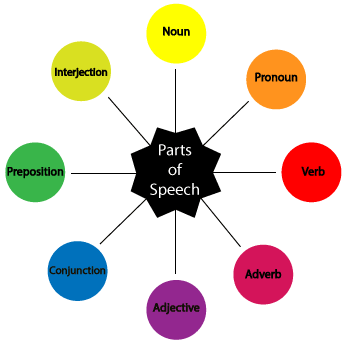
Parts Of Speech in Brief


Parts of speech In Brief
Definition; the basic of components of a language through which we can modify a word in a sentences is called parts of speech.
Note; there are total eight kinds of parts of speech.


•         Noun                               اسم
•         Pronoun اسم ضمیر
•         Verb فعل
•         Adverb فعل متعلق                       
•         Interjection
•         Conjunction
•         Preposition حروف جار
•         Adjective  اسم صفت
•         Noun  اسم                                                                                   
Definition; the name of place, person, an animal or thing is called noun.
For example;
Place; ground, shop, city Quetta etc.
Person; Ali, Aslam, Salman, Sijad etc.
Animal; dog, cat, camel, fox etc
Things; table, book, pen, page door, window etc.
•         Pronoun   اسم ضمیر                                      
Definition; pronoun is a word which is used instead of any noun.
For example;
Aslam is my friend. He is very intelligent.
نوٹ؛ اب یہاں اسم ضمیر ہے ۔
Pronouns; I, we, you, he, she, it, they, mine, your, our, him, us, them, their, etc called pronouns.
•         Verb فعل
Definition; verb is word which show any action is called verb.
For example;
We defeat them. (Here defeat is a verb and it is showing action of defeating)
He plays football. (Here play is a verb and it is showing action of playing)
•         Adverb    فعل متعلق
Definition; an adverb is a word which is used for qualifying the meaning of verb, adjective, or other adverbs is called adverb.
وہ الفاظ جو کسی اسم صفت یا دوسرے متعلقات فعل کی کسی خصوصیت کو ظاہر کر ے فعل متعلق کہلاتا ہے۔
For example;
He walks slowly. (Here slowly is an adverb)
They are very fast.  (Here very is an adverb)
She is running very slowly.
•         Interjection
Definition; an interjection is word which is used in a sentences to express some feeling of the mind.
یہ وہ الفاظ ہے جو کسی جذباتی یا ذہنی کیفیت کو ظاہر کرنے کیلئے استعمال ہوتا ہے۔
For example; hurrah! Alas! Wow! Ho! Hum! Etc.
Hurrah! They passed in exam.   
Alas! He died.      Wow! So beautiful is it?
•         Conjunction
Definition; a conjunction is a word which is used for joining one word to another or one another sentences to another sentence.
حروف  عطف ایک الفاظ ہے جو ایک الفاظ یا جملے کو دوسرے الفاظ یا جملے سے ملاتا ہے۔
For example; and, but, because, so that, in order to etc.
Ali and his brother have come. (In this sentence and is conjunction)
Work hard so that you may pass the exam. (In this sentence so that is conjunction)
(7) PREPOSITON
Def; preposition are words which are used to show relationship between noun and pronoun is called preposition.
           (Some common preposition)
About
Before
Down
Inside
Past
Above
Behind
During
Into
Since
Across
Below
Despite
Near
Through
After
Beneath
except
Of
Till
Along
Beside
For
On
Under
Among
Between
From
Onto
With
At
Bottom
In
Out
With in
For example;
What are you thinking about them?
See above examples.
The cat runs across the road.
They will decide after 11 o clock.
He is among the children.
I am athome.
The dust is at the bottom of the glass.
They are in the room.
We are near the bus stop.
He is working since morning.
They are sitting under the tree.
 HOME WORK: make fifteen sentences about preposition.
  (8) Adjective
Def; adjective is word which tells us about quality, the quantity, the number, the kind, the color of person or thing.
For example;
He is an honest person.                   (Quality)
They are bed boys.                          (Quality)
There is some water in the glass.   (Quantity)
There are 70 boys in the school.    (Numbers)
This is red car.                                (Color)

These are Indian movies.               (Kind)